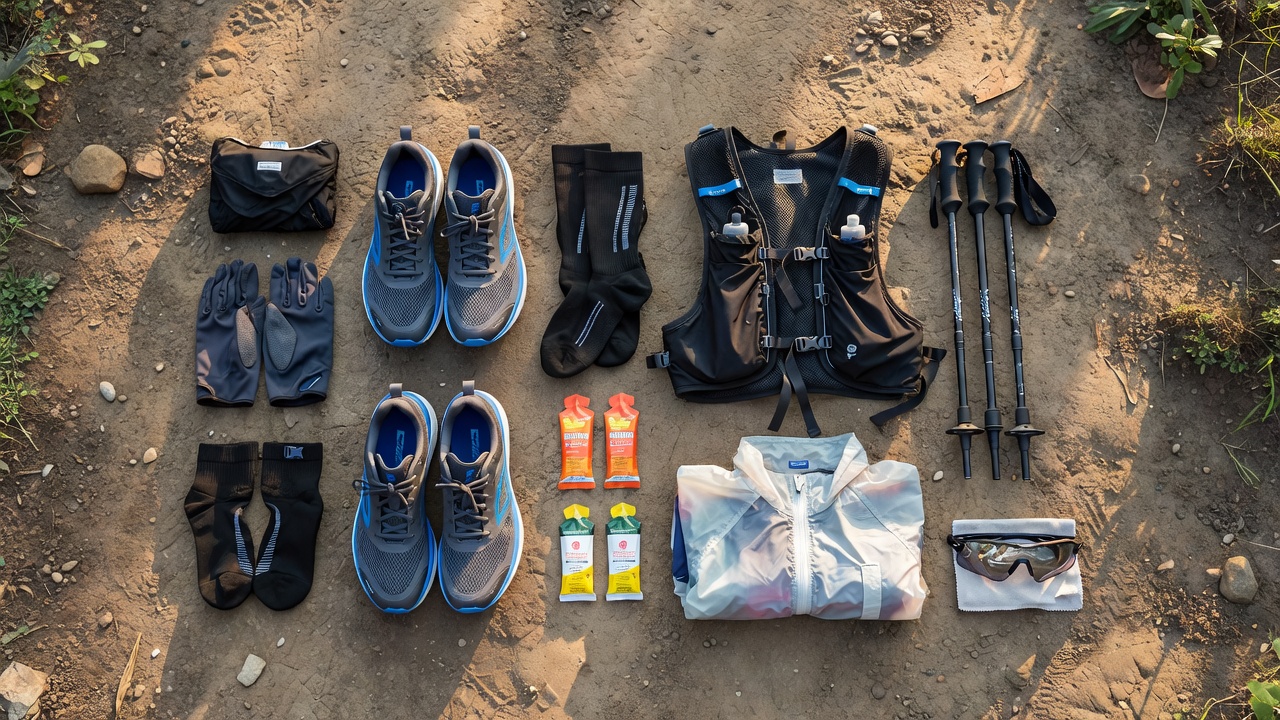
The gear required for a multi-day international run differs significantly from a typical weekend long run. When crossing diverse ecological zones, equipment must balance durability, utility, and weight. The margin for error regarding gear failure is practically zero when miles away from civilization.
Footwear and Shoe Rotation
Foot care is paramount in expedition running. Because transcontinental efforts often include sections of road, gravel, and technical trail, relying on a single type of shoe is a recipe for disaster.
Runners typically utilize a structured shoe rotation strategy:
- Max-Cushioned Road Shoes: Utilized on long stretches of asphalt to reduce the sheer impact forces absorbed by the joints over consecutive 30-plus mile days.
- Hybrid Trail Shoes: Ideal for mixed terrain, providing enough grip for dirt tracks without the uncomfortable stiffness of rigid lugs on hardpack surfaces.
- Sizing Up: As mileage accumulates over days, feet invariably swell. Runners often transition to shoes half a size or even a full size larger by the second week of a continuous effort.
Socks play an equally critical role. Moisture-wicking merino wool or specialized anti-blister synthetic blends help manage sweat and friction. Many athletes apply robust foot lubricants daily to prevent hot spots from developing into run-ending blisters.
Hydration Vests and Load Bearing
A well-fitted hydration vest acts as a mobile command center. It must comfortably carry water, calories, and mandatory safety gear without chafing the shoulders or ribs over extended durations.
When selecting a pack, capacity is measured in liters (typically ranging from 5L to 15L). For stage races where runners carry all their own sleeping gear and food, a larger 15L to 20L pack is required. These packs are designed to keep the weight tight against the spine to minimize bouncing, which wastes energy and causes abrasive skin damage.
Climate-Adaptable Apparel
Running through mountains into valleys involves drastic temperature shifts. A layered clothing system allows runners to thermo-regulate efficiently without stopping to change their entire outfit.
| Layer Type | Function & Material |
|---|---|
| Base Layer | Sits against the skin. Must aggressively wick sweat to prevent chilling. Lightweight merino wool or specialized synthetics. |
| Mid Layer | Provides insulation by trapping warm air. Often a lightweight fleece or highly breathable synthetic long-sleeve. |
| Outer Shell | Protects against wind and precipitation. A high-quality, fully seam-taped waterproof jacket is universally mandated in mountain stage races. |
Electronics and Safety Equipment
Power management is a major consideration. GPS watches, headlamps (crucial for navigating terrain before dawn or after dusk), and satellite trackers all require charging. Runners utilizing a self-supported strategy rely on high-capacity, lightweight power banks and occasionally portable solar panels.
Safety equipment is rarely used but absolutely vital. This typically includes a space blanket or emergency bivy sack, a whistle, a basic first aid kit emphasizing wound care and tape, and water purification tablets or a micro-filter. When moving across international borders in remote areas, the ability to self-rescue or safely wait for extraction can save a life.